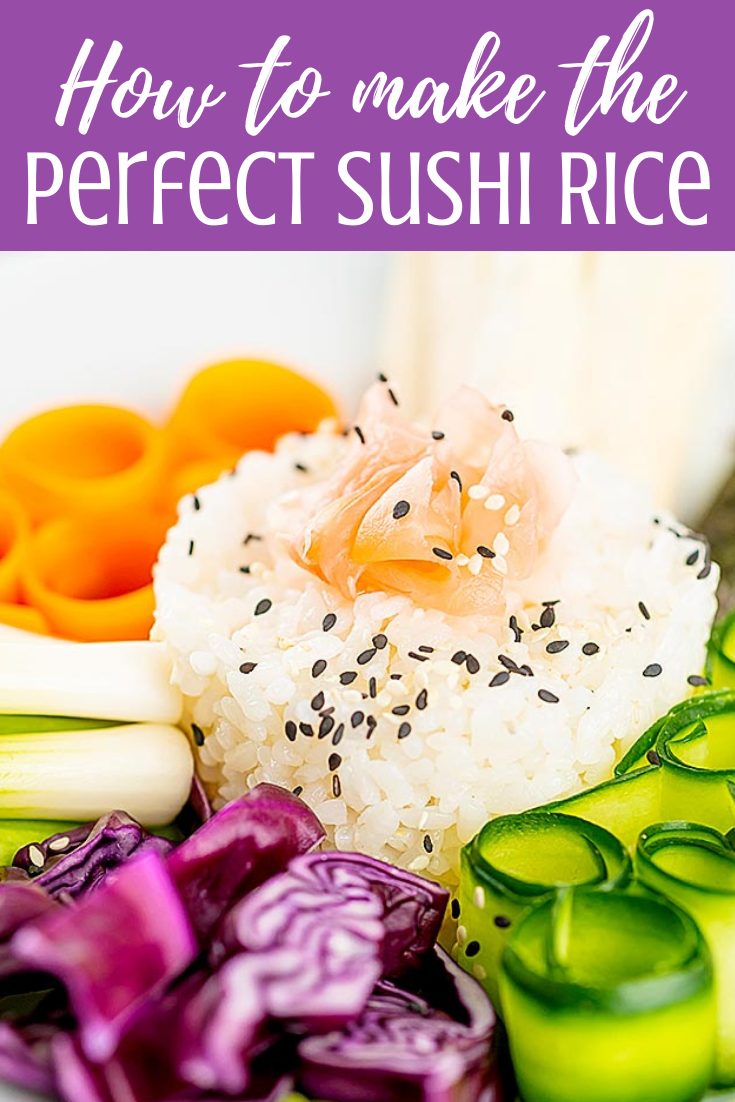
Instant Pot Sushi Rice
Ingredients
carrot
mushrooms
zucchini
sugar snap peas
peas
edamame
cucumbers
tofu
mango
avocado
nori strips
red cabbage
Directions
Follow these tips and tricks to make the best sushi rice:
Make sure you rinse the rice without soaking the rice too much.
Make sure to fully dissolve the sugar and salt into the vinegar before mixing with the rice. You could gently warm the vinegar to help it dissolve.
If making sushi, allow the sushi rice to cool before serving.
Don’t over cook the rice, it can become mushy and get a bad texture.
Don’t scrape the rice that is stuck to the bottom. This is often burned or dried out and won’t taste great.
Use a wooden spoon to handle the rice, not a metal spoon. A metal spoon can damage the rice.
If you don’t work with the Instant Pot a lot, you may wonder what the difference between a quick release and natural release and what they each do.
A quick release helps stop the cooking process. It allows you to open the Instant Pot within a few seconds of the timer going off. In some recipes, it helps prevent the food from over cooking.
A natural release means you let the pressure slowly release. During this time, the food still cooks. It is often for a certain amount of time, like 5 minutes. After the time is up, you would do a quick release of the remaining pressure.
In some cases, a recipe may all for a total natural release until all the pressure is released and the pin drops. This can take several minutes.
For this recipe, we use a quick release so we can get the rice out soon after the timer goes off.
You need to rinse the rice, but do not soak the rice. The rice should not be oversaturated with water. The texture of the rice may change if it gets water logged.
You can buy products called sushi rice. You could use these. If you can’t find them, you can use pearl rice, Glutinous rice, or Japanese rice.
Jeera and brown rice can be very tasty, but you should avoid using these varieties for sushi rice.
We recommend using sushi vinegar, rice vinegar, rice wine vinegar, or regular vinegar. We don’t recommend using apple cider or red wine vinegar for this recipe. They can change the flavor quite a bit.
A metal spoon can damage the rice, so we recommend using a wooden spoon instead. A glass bowl helps prevent any changes in flavor.
water 2 cups
Thoroughly rinse the rice for 6-8 times without allowing the rice to absorb too much water.
Add the water and rice to the inner pot.
Close the lid seal the vent and pressure cook for 6 minutes followed by a natural pressure release.
While the rice is pressure cooking, in a separate glass bowl make the Sushi Rice seasoning by dissolving the salt and sugar thoroughly in the sushi vinegar or rice vinegar.
Once the rice is ready, open the lid and fluff the rice with a fork.
Gently remove the rice in a glass or wooden bowl without breaking the rice.
Add the sushi rice seasoning and gently mix it in the rice using a wooden spoon.
Sushi rice is ready to be rolled into a sushi or to be added to a sushi bowl.
Notes
Make sure you rinse the rice without soaking the rice too much.
Make sure to fully dissolve the sugar and salt into the vinegar before mixing with the rice. You could gently warm the vinegar to help it dissolve.
If making sushi, allow the sushi rice to cool before serving.
Don’t over cook the rice, it can become mushy and get a bad texture.
Don’t scrape the rice that is stuck to the bottom. This is often burned or dried out and won’t taste great.
Use a wooden spoon to handle the rice, not a metal spoon. A metal spoon can damage the rice.